A greener remodel makes your Colorado Springs home more comfortable and cheaper to run for years after the crew packs up. This guide covers the choices you face before any wall comes open: what to upgrade first, which materials earn their place, what drives the bill, how to test a contractor’s green claims and how to keep usable materials out of the dumpster.
Key Takeaways
- Judge a product by what it saves and how long it lasts in your house, never by a green word on the packaging.
- Tighten the house’s shell before replacing the furnace, or the new equipment spends every winter reheating air that leaks away.
- Settle on fixtures and appliances during design, before drywall goes up, since those daily-use pieces are where a kitchen or bath saves energy and water.
- Favor flooring that can be refinished or repaired a plank at a time, and ask about the wear layer before you buy.
What makes a remodel sustainable, and what is just a label
A remodel is sustainable when the house uses less energy and water for years after the work is done, and when what goes into it lasts long enough that nobody tears it out again soon. A word printed on a box does neither. “Eco” and “green” are marketing terms with no test behind them unless the product names one, so judge each item by what it will do in your home. Does it lower a utility bill? Will it outlast the thing it replaces?
Cabinets show the gap.
A cabinet sold as eco-friendly that delaminates within a few years becomes landfill with a nicer story attached. A plainer box built to hold up is the greener buy. Our piece on sustainable kitchen materials sorts out which ones earn the claim, and the one on eco-friendly kitchen upgrades in Colorado covers the changes that cut use. The same two questions apply to every line of a kitchen remodeling plan, from the cabinet boxes to the faucet.
Why start with insulation, air sealing and windows in a Front Range home?
Start with the shell because every later upgrade lives inside it. Heat lost through leaks or worn windows is heat a new furnace has to make again, every winter. ENERGY STAR, the federal government’s energy-efficiency program, names insulation, air sealing and windows among the home upgrades that cut energy use.
Colorado Springs winters are cold and dry at this altitude. A leaky house pulls that dry outside air in through every gap, so rooms feel drafty, indoor air turns parched and the furnace runs longer.
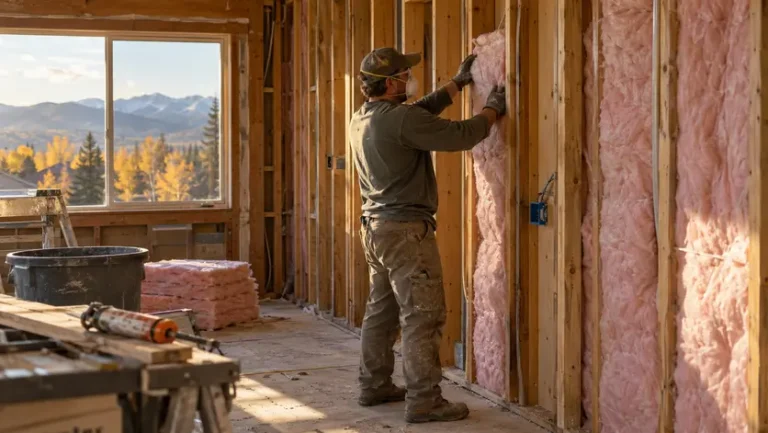
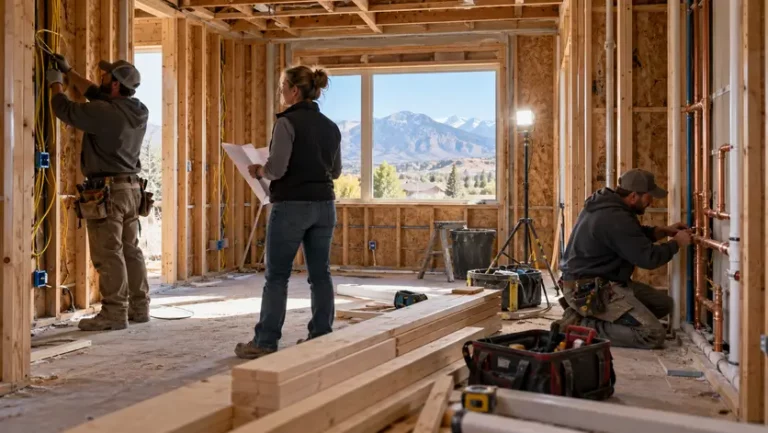
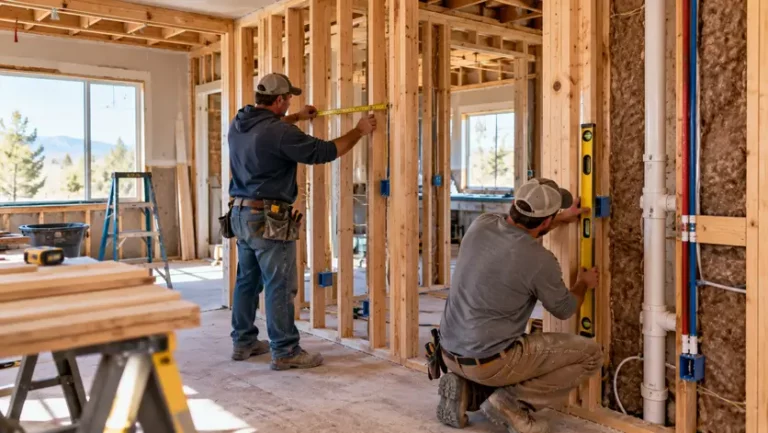
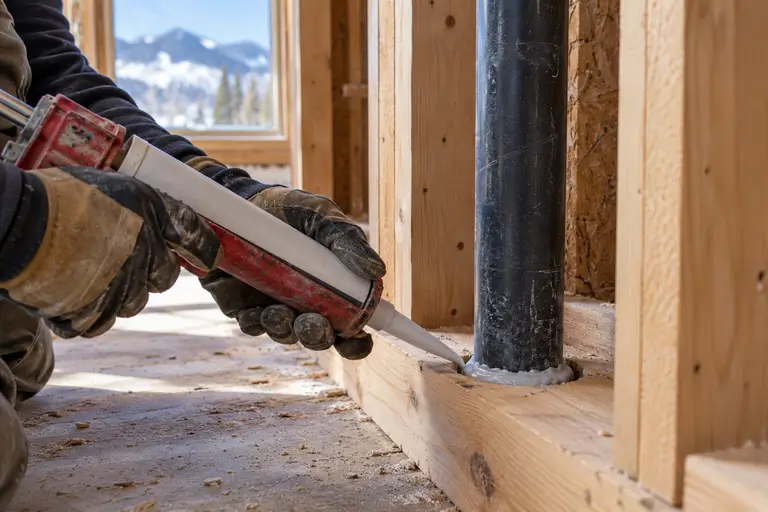
Timing matters as much as the list. Air sealing means closing the gaps where indoor air escapes into the attic or wall cavities, often around pipes and wires that pass through the framing. Those gaps are easiest to reach while the drywall is already off for a remodel. Once new board and paint cover them, sealing them later means opening the wall again.
Windows follow the same logic. Set new units before the interior trim goes on, so the finish work fits the new opening instead of being patched around it. Our article on which order to remodel a home in shows where this shell work falls against the other trades.
What cuts energy and water use in kitchens, baths and basements?
Most of the savings come from the fixtures and appliances you use every day. Choose them while the walls are open, because that is when swapping them costs the least effort.
In a bathroom, a low-flow showerhead and a high-efficiency or dual-flush toilet use less water without asking anyone to change habits. During bathroom remodeling, the shower valve and supply lines are exposed, so this is the moment to set them. Hot water counts twice: each gallon you save at the shower is a gallon the water heater never has to warm.
Kitchens gain the most from ENERGY STAR appliances and LED lighting, both overhead and under the cabinets. The refrigerator runs around the clock and the dishwasher most days, so those are the two appliances to pick first. Settle the models during design, because cabinet openings are built to an appliance’s size and a late swap can mean reworking a box. If you want an induction cooktop, plan its dedicated circuit while the walls are open; running new wire after the backsplash is up is far more work. At the sink, a faucet with a low-flow aerator cuts water use the same way a low-flow showerhead does in the bath.
Basements bring heating and cooling into the picture. ENERGY STAR puts as much as half of all household energy use toward heating and cooling. Finishing a basement adds space the furnace has to condition. Seal the ductwork that runs through it before the ceiling closes, so warm air reaches the rooms instead of leaking into the joist bays.
Which flooring and materials last and go easier on the planet?
Pick flooring you can repair or refinish in place; a floor that gets renewed stays out of the landfill. How long it lasts depends on the wear layer (the top surface that takes foot traffic) and the room’s moisture.
Dry winter air matters here too. Solid wood shrinks through a Colorado Springs heating season, so let it acclimate inside the house before installation and expect thin seasonal gaps between boards.
| Flooring | How it lasts | Ask before buying |
|---|---|---|
| Solid hardwood | Refinished instead of replaced | Reclaimed or new? |
| Engineered wood | Refinishing limited by wear layer thickness | How thick is the wear layer? |
| Porcelain tile | Handles water in baths and basements | Spare tiles kept? |
| Vinyl plank | Worn planks replaced singly | Single planks replaceable? |
What drives the cost of a greener remodel?
Two things set the cost of a greener remodel: the size of the job, and whether each green choice replaces something you were buying anyway or adds work that would not otherwise happen.
Swaps add the least. An efficient toilet or showerhead in place of a standard one changes the fixture line on the bid, while the plumber’s time to set it stays about the same. Added work is where the bill grows: sealing ducts, air sealing the framing or adding insulation brings labor hours of its own, though doing it with the walls already open costs far less than opening them again later. Salvage can go either way, since careful removal of cabinets to reuse or donate takes longer than tearing them out but can mean fewer loads to haul.
Labor matters here. Skilled trade labor averages around $52 per hour in Colorado, and demand for qualified contractors stays high along the Front Range, which is part of why remodels cost more in this state. For a base to measure against, a typical bathroom remodel in Colorado Springs costs between $10,000 and $38,000 in 2026, with most mid-range projects landing around $15,000 to $25,000. A small bath runs $10,000 to $20,000. Where efficient upgrades land inside that span depends on the room’s size and on how much of the added work is labor rather than a different product.
How do you plan the work and pick a contractor who builds green?
Plan by writing down what each green choice should do before you collect bids, then hire the contractor whose answers match that list. A goal such as lower winter heating bills, or a floor you can refinish rather than replace, gives every bidder the same target.
Then test each green claim with questions that need specific answers. Which product, by name and model, and what label or test stands behind calling it efficient? Can you see the spec sheet that shows it? When does the air sealing happen, and is it before the drywall goes up? What will be salvaged, donated or recycled from demolition, and where does it go? A contractor who builds this way answers each one plainly and lists every item by name on the written bid, so you can compare bids line by line. A vague answer about an “eco” product is the warning sign.
Our family-owned company has completed 650+ remodels across Colorado Springs and the Pikes Peak region. Greg Wickham, who founded Wickham’s Workbench in 2003, is still your point of contact: when you call, you get him, not an out-of-state call center.
We serve Colorado Springs, Stratmoor, Manitou Springs, Cimarron Hills, Black Forest, Palmer Lake, Fountain, Littleton, Woodmoor, Woodland Park, Gleneagle, Monument, Castle Rock, Larkspur, Cascade, Security-Widefield and Ellicott.
How can you keep, reuse or donate materials to cut demolition waste?
Decide what stays before demolition starts, because waste that is never made needs no hauling or recycling. Demolition represents more than 90 percent of total construction and demolition debris generation, while construction represents less than 10 percent, according to the Environmental Protection Agency’s page on construction and demolition materials. The same page calls this approach source reduction: it prevents waste in the first place, while reuse and recycling only deal with waste after it exists.
What you do not keep can still skip the landfill. Cabinets, doors, light fixtures and leftover tile in good shape can go to a building-material reuse store around Colorado Springs, and old copper pipe and ductwork can go to a scrap-metal recycler.
If you are weighing what in your home is worth keeping, contact us or call (719) 632-5117 to talk it through.
Sources
- Sustainable Management of Construction and Demolition Materials | US EPA, U.S. Environmental Protection Agency, retrieved 2026-10-19.
- Energy Savings at Home | ENERGY STAR, energystar.gov, retrieved 2026-10-19.