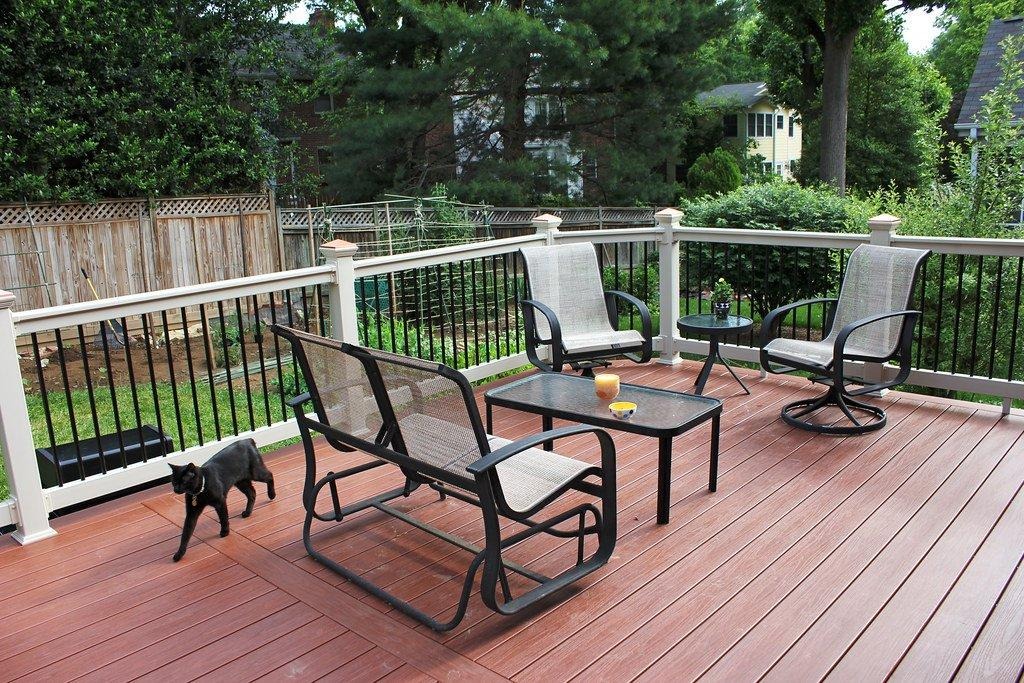
A new deck in Colorado Springs costs roughly $25 to $80 per square foot installed in 2026, or about $8,000 to $35,000 for a typical 300–400 sq ft deck. Pressure-treated wood sits at the low end and capped composite like Trex or TimberTech at the high end. Your final price depends on material, size, height off the ground, railings, and how our Front Range climate shapes the build.
Key Takeaways
- Installed deck cost in 2026 runs $25–$80 per square foot, with labor adding about $10–$15/sq ft (HomeGuide, 2026).
- Composite decking typically lands around $35–$55 per sq ft installed; pressure-treated wood is cheaper up front but needs yearly upkeep.
- The national average for a 16×20 composite deck is $25,096 per the 2025 Zonda Cost vs. Value Report.
- At 7,000 ft, UV, hail, and freeze-thaw cycles make material choice a long-term cost decision, not just an upfront one.
What does a deck cost per square foot in Colorado Springs?
Most Colorado Springs homeowners pay $25 to $80 per square foot for a professionally installed deck in 2026, with labor alone accounting for $10–$15 of that (HomeGuide, 2026). The spread is wide because “a deck” can mean a simple ground-level platform or an elevated, multi-level structure with stairs and built-in seating.
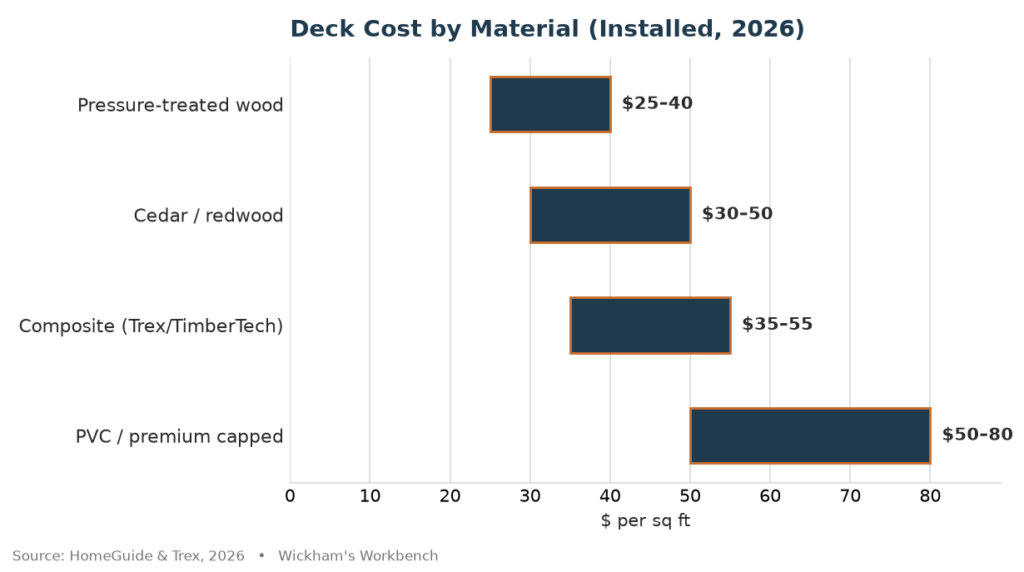
Here’s how the main materials compare for an installed deck in our market:
| Material | Installed cost / sq ft | 300 sq ft deck | Best for |
|---|---|---|---|
| Pressure-treated wood | $25–$40 | $7,500–$12,000 | Tight budgets, smaller decks |
| Cedar / redwood | $30–$50 | $9,000–$15,000 | Natural look, mid-range budgets |
| Composite (Trex, TimberTech) | $35–$55 | $10,500–$16,500 | Low maintenance, long-term value |
| PVC / premium capped | $50–$80+ | $15,000–$24,000 | Max durability, high-end finish |
Ranges from HomeGuide and Trex, 2026; composite reflects mid-grade lines (premium composite runs higher). Actual pricing varies by design.
Want a side-by-side breakdown of the two most popular options before you budget? Our wood vs. composite decking comparison walks through the trade-offs in detail.
Why do decks cost more to build on the Front Range?
Building at 6,000–7,000 feet adds real costs you won’t see in a national average. Colorado construction generally runs 8% or more above the national average on labor and materials, and decks feel the climate harder than most projects because they’re fully exposed.
Three local factors drive the price:
- UV and hail: Intense high-altitude sun fades and cracks cheaper boards faster. Hail dents soft woods. Capped composite and PVC resist both, which is why many local homeowners spend more upfront to avoid replacing a deck in 10 years.
- Freeze-thaw cycles: Our daily temperature swings expand and contract fasteners and footings. Proper concrete footings below the frost line cost more but prevent heaving.
- Wind and slope: Hillside lots in areas like Black Forest, Monument, and the western foothills often need taller posts, more bracing, and engineered connections.
That’s the hidden math of decking in Colorado: the cheapest board rarely wins over a 20-year horizon. Wood costs less to install but needs staining every 1–2 years, while composite typically narrows the gap by eliminating that upkeep.
What else affects your final deck price?
Beyond material and square footage, a handful of design choices move the number the most. Railings and stairs are the usual surprises, often adding 15–30% to a project depending on style and code requirements.
Budget line items to plan for:
- Height & stairs: Elevated decks need more posts, beams, and a staircase, all of which add labor and material.
- Railings: Metal, cable, or glass railings cost far more than basic wood. For homes with a view, our guide to choosing deck railings for mountain views covers the options.
- Permits: Most decks in Colorado Springs and El Paso County require a building permit and inspection, especially when attached to the house or over 30 inches high.
- Site prep: Removing an old deck, grading a slope, or working around utilities adds cost.
- Extras: Built-in benches, lighting, pergolas, and under-deck drainage all raise the total.
Is a deck a good investment in Colorado Springs?
Yes. Wood decks have historically recouped around 80% of their cost at resale in Remodeling’s annual Cost vs. Value report, one of the stronger returns of any outdoor project. In a market like Colorado Springs, where outdoor living and mountain views are a major selling point, a well-built deck adds both usable space and buyer appeal.
The smarter long-term play for most homeowners is matching material to how long you’ll stay. Planning to sell in a few years? Pressure-treated or cedar keeps upfront cost down. Staying put? Composite or PVC saves years of staining and replacement, which is where the real savings show up.
Either way, the difference between a deck that lasts 10 years and one that lasts 30 usually comes down to footings, fasteners, and flashing, not the brand of board. That’s the part a quality local builder gets right.
Ready to price out your deck?
Wickham’s Workbench builds decks and porches engineered for Front Range weather, from material selection to permits and inspection. Call (719) 632-5117 or request a free consultation for a custom quote on your project. See our work on the decks & porches page and browse the project gallery.
Frequently Asked Questions
How much does a 12×12 deck cost in Colorado Springs?
A 144 sq ft (12×12) deck typically runs $3,600 to $11,500 installed in 2026, depending on material. Pressure-treated wood sits near the low end, while capped composite with quality railings lands at the higher end. Height and stairs push the total up.
Is composite decking worth it in Colorado?
For most homeowners, yes. Composite costs $35–$55 per sq ft installed but resists UV fading, hail, and moisture without yearly staining. Over a 20-year span on the Front Range, the saved maintenance often offsets the higher upfront price compared to wood.
Do I need a permit to build a deck in Colorado Springs?
Usually yes. Decks attached to the home or higher than 30 inches above grade generally require a building permit and inspection in Colorado Springs and El Paso County. A licensed contractor handles the permit and ensures footings meet frost-depth code.
How long does a deck last in Colorado?
Pressure-treated wood lasts about 10–15 years with regular maintenance, cedar 15–20 years, and quality composite or PVC 25–30+ years. Our high-UV, freeze-thaw climate shortens the life of unmaintained wood, which is why material choice matters so much locally.
When is the best time to build a deck in Colorado Springs?
Late spring through early fall offers the most reliable weather, but booking in winter or early spring often means shorter wait times and earlier completion. Footings can be poured in most conditions as long as the ground isn’t frozen solid.
Sources: HomeGuide, Cost to Build a Deck (2026), retrieved 2026-06-22; Bob Vila, Cost to Build a Deck, retrieved 2026-06-22; Trex, Deck Cost, retrieved 2026-06-22; Remodeling 2025 Cost vs. Value report (composite deck national average $25,096; wood deck ~80% cost recouped). Cost ranges are estimates for planning only; request a quote for pricing specific to your project.