The Best Finish for Bathroom Faucets, and How to Pick One That Fits Your Bathroom
For most bathrooms, the best finish for bathroom faucets is brushed nickel or a PVD-coated finish, because they hide water spots and fingerprints and hold up to daily cleaning. Chrome is the easiest to wipe clean but shows every spot. Matte black and brass make a statement and need gentler care. Pick based on how often you’ll clean and what else shares the room.
Key Takeaways
- Brushed nickel suits most households because it hides spots and fingerprints and pairs with almost any bathroom.
- The coating under the colour, whether plating, PVD or powder coat, decides how well a finish holds up.
- Mild soap, a soft cloth and drying after use protect every faucet finish from clouding and pitting.
Which faucet finish should you choose?
If you want the least fuss, choose brushed nickel, ideally a PVD version. It hides spots, forgives fingerprints and works with almost any tile or vanity. Choose polished chrome if you’ll wipe the faucet often. Choose matte black or brass when the look matters more to you than daily upkeep.
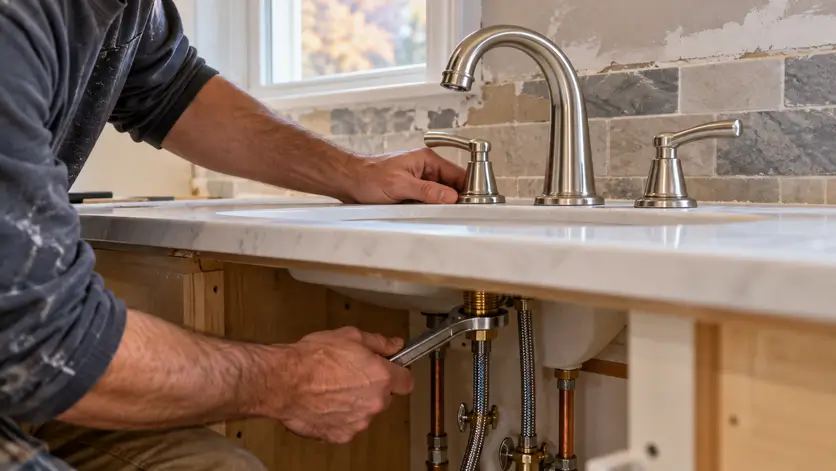
I install these fixtures for a living, and the regrets I hear later are rarely about colour. They’re about upkeep. People who put chrome in a busy kids’ bathroom tell me they wipe it constantly. People who chose unlacquered brass sometimes didn’t expect it to darken. Before you shop, answer three questions:
- How often will someone clean this faucet?
- Will water spots bother you, or can you live with a few?
- Do you want a look that lasts, or one that feels current now?
How do chrome, brushed nickel, matte black, brass and bronze compare?
The real difference is the coating under the colour. Chrome is electroplated: hard, but shiny enough to show everything. Many brushed nickel, brass and bronze finishes on better faucets use PVD (physical vapour deposition), which bonds tightly and resists scratches. Some matte black finishes are powder coat or paint, which can chip under scrubbing. The spec sheet tells you which process you’re buying.
| Finish | Typical coating | Shows spots and prints | Cleaning effort | Look over time |
|---|---|---|---|---|
| Polished chrome | Electroplated | Shows both readily | Low; wipes clean fast | Classic, rarely dates |
| Brushed nickel | Plated or PVD | Hides both well | Low | Long-lasting neutral |
| Matte black | Powder coat, paint or PVD | Shows mineral spots, hides prints | Moderate; gentle products only | Current, may date sooner |
| Brass | PVD, clear lacquer or unlacquered | Hides prints fairly well | Moderate | Warm; unlacquered darkens |
| Oil-rubbed bronze | Applied or living patina | Hides spots well | Low to moderate | Traditional; patina shifts |
Which finishes hide water spots and are easiest to clean?
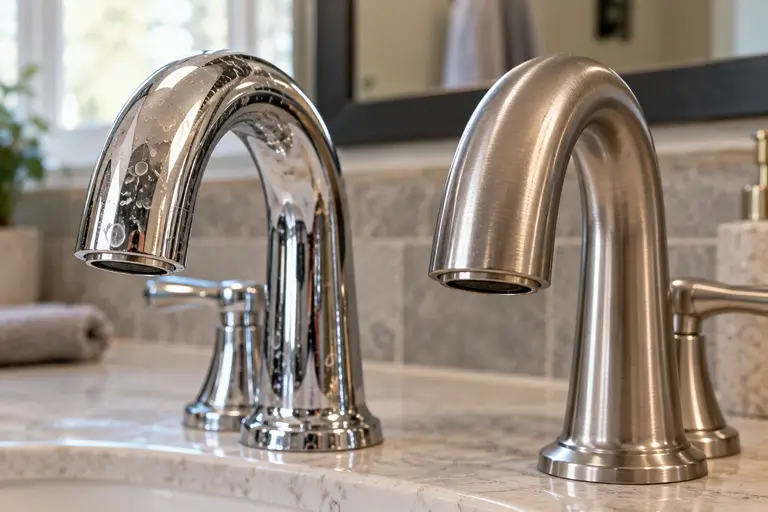
Brushed nickel and other satin finishes hide water spots best. Chrome is the easiest to clean, even though spots appear quickly. Matte black and unlacquered brass take the most care, because mineral residue stands out on dark or warm surfaces and harsh products can mark them.
The reason is texture. A brushed surface scatters light, so a dried droplet blends in. Polished chrome reflects light, so every spot shows, but one pass with a cloth clears it. Matte black has no sheen to hide behind, so white residue from dried water is easy to see. If nobody in your house will wipe the faucet after use, a satin finish saves you frustration.
Which finishes stay in style for years?
Polished chrome and brushed nickel are the timeless choices. They’ve been in bathrooms for generations and suit white, grey and wood-tone rooms alike. If you plan to sell in a few years or don’t want to redo fixtures, these are the safest picks.
If you’re asking about the most popular bathroom faucet finish right now, matte black and warm brass get plenty of attention. They look great in the right room, but trend-driven finishes tend to date faster. A fair middle ground is a neutral faucet with bolder cabinet pulls, which cost far less to swap later. Before you commit, compare your faucet choice against the bathroom tile trends for 2025 you’re considering, since tile stays put much longer than hardware.
How do you clean a faucet finish without clouding, pitting or discolouring it?
The safest way is mild dish soap, warm water and a soft cloth, followed by a dry towel so minerals can’t settle. Moen’s finish care guidance advises avoiding abrasive cleaners to prevent clouding, pitting or discolouration, and that advice holds for every finish I install.
- Wipe with warm, soapy water on a microfiber cloth.
- Rinse with clean water to remove soap film.
- Dry the faucet fully, including the base and handles.
- Skip scouring pads, bleach, ammonia and acidic or gritty cleaners.
- Check the faucet maker’s care sheet before trying any specialty product.
Matte black and unlacquered brass deserve the lightest touch, because scrubbing can burnish or strip them. For more on caring for fixtures after install, see our guide to maintaining new kitchen fixtures; the same habits apply in the bathroom.
How should the faucet match shower trim, hardware and lighting?
Keep the sink faucet, shower trim and tub filler in the same finish from the same brand, because they read as one set and shades vary between manufacturers. Cabinet hardware, towel bars and light fixtures can match or complement, as long as the choice looks intentional.
- Match within the wet zone: faucet, shower valve trim, showerhead and tub spout.
- Coordinate the accessories: towel bars, robe hooks and paper holder, ideally from the same collection.
- Allow one contrast: a brass light fixture or black mirror frame can pair well with nickel plumbing.
- Limit the count: more than two metal finishes in one room tends to look accidental.
In a small room, every fixture sits in view at once, so consistency matters more. Our small bathroom ideas show how finish choices play out when space is tight.
Why choose fixture finishes as part of a bathroom remodel?
Choosing finishes during a remodel lets you match the shower valve, faucet and accessories in one order, because shower trim is tied to the valve brand behind the wall. Deciding late often means settling for a close match. It’s also the right time to pick water-saving models from the EPA WaterSense bathroom sink faucet search, which lists faucets that meet the program’s efficiency criteria.
Wickham’s Workbench has been family-owned since 2003, and we’re a licensed contractor, license #C170062. When you plan a bathroom with us in Colorado Springs or anywhere across our Pikes Peak service area, I stay your point of contact from finish samples to final install. Our bathroom remodeling service covers the full project, and our breakdown of what drives bathroom remodel cost in Colorado Springs helps you set a budget.
When you’re ready to plan finishes for your bathroom, get in touch with me here.
Frequently Asked Questions
What are the faucet finish trends for 2026?
Warm metals like brushed brass and bronze, matte black, and softer satin nickel tones continue to draw interest. Mixed-metal rooms that pair neutral plumbing with a bolder light or cabinet pull are common too. If you want longevity, keep the plumbing neutral and put trends in easy-to-swap pieces.
What sealant do you use for bathroom faucets?
We follow the faucet maker’s installation instructions, because they name the right product for that model. Many faucets seal with a gasket at the base. Others call for plumber’s putty or silicone, and some stone countertops need a non-staining option. Using the wrong product can void a warranty.
Do I need silicone sealant for a bathroom faucet?
Not always. Many modern faucets include a rubber or foam gasket that seals the base without extra sealant. Silicone is used when the manufacturer calls for it or when the countertop surface requires it. Adding sealant a faucet doesn’t need can make future repairs harder.
Sources
- Moen | Bathroom & Kitchen Faucets, Shower Heads, Accessories & More, Moen Incorporated, retrieved 2026-09-28
- WaterSense Product Search – Bathroom Sink Faucets/Accessories | US EPA, U.S. Environmental Protection Agency, retrieved 2026-09-28