How Much Does a Bathroom Addition Cost in Colorado Springs?
A bathroom addition in Colorado Springs can typically cost $25,000 to $75,000 or more, depending on the size, location and amount of new construction involved. A smaller bathroom added near existing plumbing may fall toward the lower end, while a larger primary bathroom addition requiring new foundation, framing, roofing and extensive plumbing can increase the cost.
Major cost factors include the distance to existing drain and vent lines, structural changes, electrical and plumbing work, permits, fixtures, tile and finish selections. Because every home is different, Wickham’s Workbench provides bathroom addition pricing after evaluating the space, construction requirements and project scope.
Key Takeaways
- National cost pages mostly describe remodeling an existing bathroom, which is a different and usually simpler job.
- Plumbing, drains and venting usually drive the cost of a bathroom addition more than tile or fixtures.
- Comparable quotes price the same scope, with plumbing route, structure, permits and finish allowances listed separately.
Should you add a bathroom or remodel the one you have?
Remodel if your current bathroom is in the right place and the right size but worn out. Add a bathroom if your household needs another toilet, sink and shower that don’t exist yet.
A remodel reuses drains, vents and supply lines. An addition creates them, and that’s where national price guides fall short. Most national cost pages describe tearing out and replacing fixtures in an existing room. The plumbing is already in the walls and floor, the room is already framed, and the permit is usually simpler. When I walk a house for a new bathroom, the questions change:
- Where will the new drain connect to your main line, and does it have enough slope to get there?
- Can a vent reach the roof or tie into an existing vent?
- Does the space need new walls, a new floor structure or a new foundation?
- Can your water heater and electrical panel carry another bathroom?
If you only need to refresh the bathroom you already have, our bathroom remodel cost guide for Colorado Springs covers that job. The rest of this page is about adding a room that isn’t there today.
Where can a new bathroom go: bump-out, basement or converted space?
A new bathroom usually goes in one of three places: a basement you’re finishing, space you already have (a large closet, laundry area or spare bedroom corner), or new square footage built as a bump-out or larger addition. Each option trades easy plumbing access against the amount of construction.
| Option | What gets built | Plumbing reality | Main trade-off |
|---|---|---|---|
| Converted space inside the house | Interior walls, floor and fixtures | Easiest when it sits beside or above an existing bathroom or kitchen | Gives up closet, laundry or bedroom space |
| Basement bathroom | Framing, fixtures, often concrete trenching | Drains may sit below the sewer line and need a pump system | Pairs well with a basement finish |
| Bump-out addition | Foundation, framing, roof, exterior finish | New lines run through a new floor system | Adds space but brings exterior work |
| Pop-top or second-story space | New upper level or raised roof | Drains and vents must route down through existing floors | The largest structural job of the four |
Many of the bathrooms I add go in basements as part of a larger finish, and our guide to basement finishing cost and value in Colorado Springs covers that project. If you’re thinking about building up, read our pros and cons of pop-top additions first.
How much does it cost to add a bathroom to an existing house?
I don’t publish a flat price for adding a bathroom in Colorado Springs, because two bathrooms the same size can cost wildly different amounts depending on how the drain has to run, what finishes you choose, etc. but it can range anywhere from $5,000 to $75,000. Your cost comes down to five things: distance to your drain and vent lines, new structure, room size, finishes and permits.
Here’s how those factors stack up, from the lower end of the range to the higher end:
- A converted space beside existing plumbing. Short drain and vent runs, no new foundation, and mostly interior work.
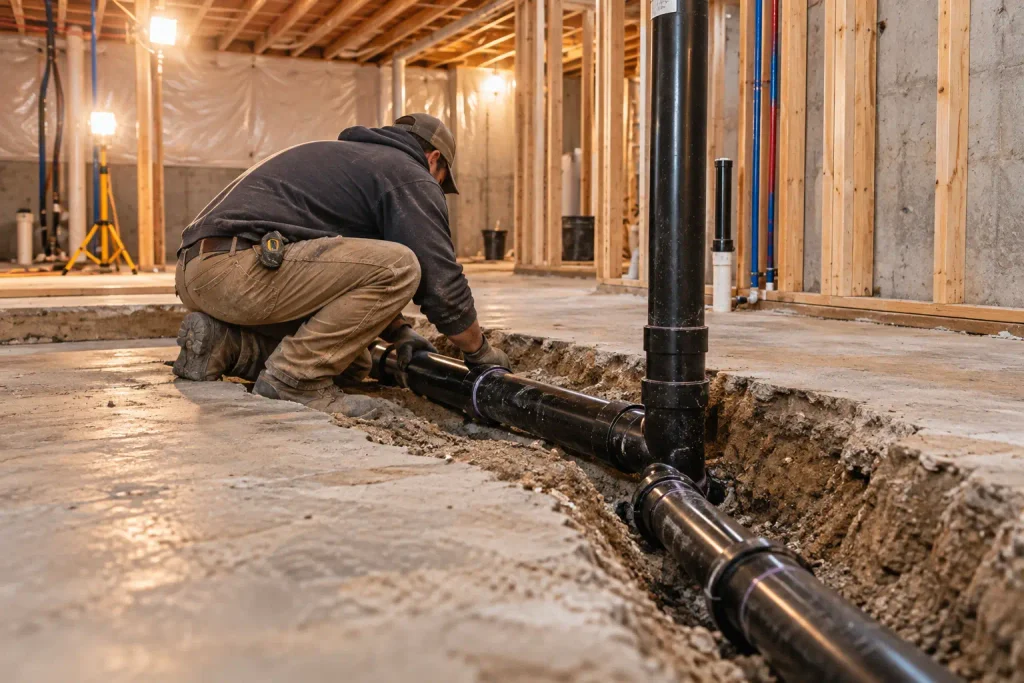
- A basement bathroom above the sewer line. Concrete may need to be cut and trenched, but gravity drainage still works.
- A basement bathroom below the sewer line. Add a pump system that lifts waste up to the main line.
- A bump-out or addition. Foundation, framing, roofing, siding and new utility runs, on top of the bathroom itself.
- A pop-top or second-story bathroom. Structural work plus drains and vents routed down through finished rooms.
Two houses with the same size bathroom and the same tile can land far apart on price because of steps one through five. That’s why I price after I’ve seen your crawlspace, basement or attic. Once you know which scenario fits your home, our guide to paying for a home remodel in Colorado Springs walks through the financing options.
Why are plumbing, drains and venting usually the biggest cost?
In most bathroom additions, the plumbing rough-in is the most expensive part of the job. A new room needs a drain that slopes steadily to your main line, venting for its fixtures, and hot and cold supply lines.
Finishes get the attention, but the pipe route sets the budget.
Drains work by gravity, so distance matters. The farther the new bathroom sits from your main stack, the more floor, wall or slab has to open to keep the slope correct. In a basement, that often means cutting and removing concrete, trenching, laying pipe and pouring the floor back. If the new fixtures sit lower than your sewer line, gravity can’t do the job, and a pump system has to lift waste up to it.
Venting is the part national pages skip. Every drain needs air behind it to flow and to keep sewer gas out of the house. Sometimes a new vent ties into an existing one; sometimes it has to run up through the house and out the roof.
The work also touches other systems: an exhaust fan ducted outdoors, new electrical circuits and possibly a larger water heater. This is licensed work. The U.S. Bureau of Labor Statistics’ profile of plumbers, pipefitters and steamfitters notes that most states and some localities require plumbers to be licensed, and I use licensed tradespeople for it.
How do size, structure and finishes move the price?
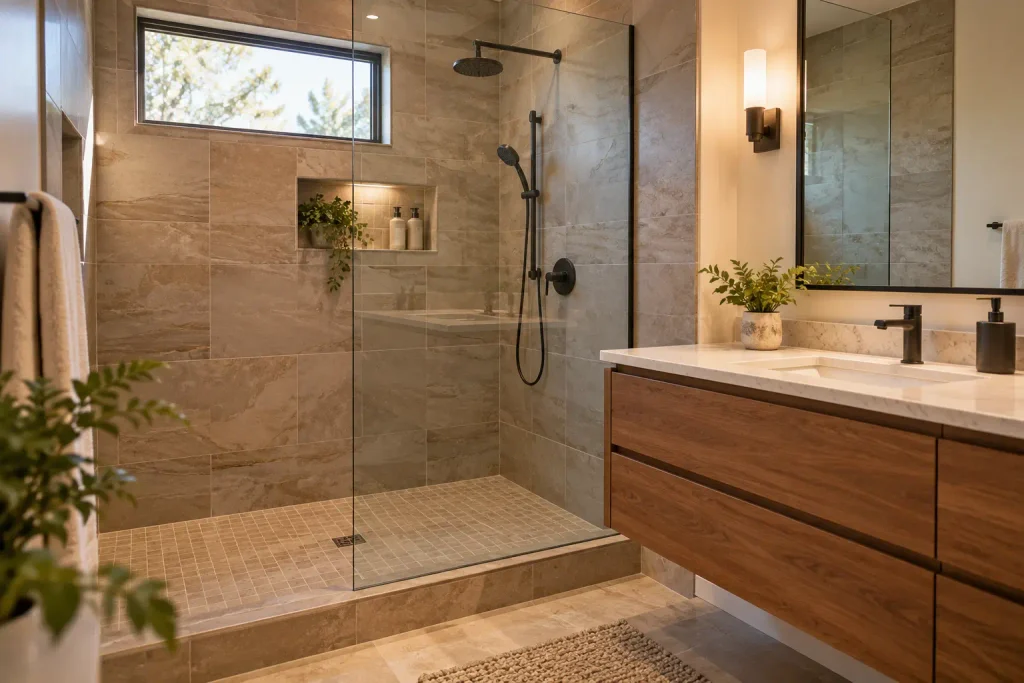
After plumbing, three things move the price most: how big the room is, how much structure has to be built or changed, and the fixtures and surfaces you choose. A half bath inside existing walls sits at one end of the range; a full primary suite in new square footage sits at the other.
- Size and fixture count. A half bath needs a toilet and sink. A full bath adds a tub or shower, which means another drain, more waterproofing and more tile.
- Structure. Removing a wall, reframing a floor, or building a foundation and roof for a bump-out adds trades, materials and inspection steps.
- Finishes. Tile, vanity, fixtures, glass and lighting are where you control the budget most directly. A curbless tiled shower costs more to build than a prefabricated shower base.
- Access. Tight crawlspaces, finished ceilings below the new room and long runs to the electrical panel all add labor.
I’d rather spend money where it lasts. On most additions, that means getting the plumbing, waterproofing and ventilation right first, then choosing finishes to fit what’s left.
What permits, inspections and timeline apply in Colorado Springs?
Adding a bathroom in Colorado Springs needs permits because it adds plumbing, electrical and ventilation, and a building permit when walls, floors or foundations change. Inspectors check the rough-in before walls close and the finished work at the end, so your timeline includes plan review and inspection scheduling, not just construction.
Our guide to home improvement regulations in Colorado Springs explains the rules behind those permits. A typical sequence looks like this:
- Design and measurements, including the plumbing route.
- Permit application and plan review.
- Demolition, structure and rough plumbing, electrical and ventilation.
- Rough-in inspections before walls and floors are closed.
- Waterproofing, drywall, tile, fixtures and final inspection.
Season plays a part along the Front Range. A bump-out needs foundation and exterior work, which is easier to schedule outside the coldest months. A basement bathroom is interior work that can move ahead year-round. For a fuller picture of how long projects run, see our home remodel timeline for Colorado Springs.
Permits are part of the job. You shouldn’t have to chase paperwork to get a bathroom built.
How do you get bathroom addition quotes you can compare?
Ask every contractor to price the same written scope, with the plumbing route, structural work, permits and finish allowances shown as separate line items. When one quote is lower, you can then see whether it’s cheaper or just leaving work out.
Questions I’d ask any contractor, including me:
- Where will the new drain tie in, and will concrete, floors or ceilings be opened?
- How will the new fixtures be vented?
- Is a pump system, larger water heater or new electrical circuit included?
- Are permits, inspections and patching of opened areas in the price?
- What finish allowances are assumed for tile, vanity and fixtures?
- Who is the licensed plumber, and what is your contractor license number?
Our license number is C170062, and when you call, you reach me directly, not a call center.
For a price built on your house rather than a national average, start with our home additions service. When you’re ready, contact Wickham’s Workbench to set up a site visit.
Frequently Asked Questions
Do I need a permit to add a bathroom in Colorado Springs?
Yes, adding a bathroom typically requires permits because the project involves plumbing and may also include electrical, mechanical and structural work. Permit requirements depend on the scope of the project and whether you’re converting existing space or building an addition. Wickham’s Workbench can account for the required permits and inspections when planning your bathroom addition.
Where is the best place to add a bathroom to an existing house?
The most practical location is often near existing plumbing, such as beside or above a kitchen, laundry room or another bathroom. Shorter runs to existing drain, water and vent lines can simplify construction and help control costs. Basements, unused closets and underused areas may also work, depending on available space and the home’s layout.
How long does it take to add a bathroom to a house?
A bathroom addition can take several weeks to a few months, depending on the scope of work. Converting existing interior space is generally faster than building a new bump-out or addition that requires foundation, framing and exterior work. Permits, inspections, plumbing changes, material availability and custom finishes can also affect the bathroom addition timeline in Colorado Springs.